


Health & Safety Policy 2027
Review status: Updated for the 2027 event following a review of the 2026 policy against current UK health and safety legislation and HSE/Home Office guidance. This statement should be read alongside the event’s detailed risk assessments, emergency/major incident plans, fire risk assessments, contractor requirements and other operational procedures.
Policy and legal framework
Badminton Horse Trials is committed to protecting, so far as is reasonably practicable, the health, safety and welfare of employees and to protecting other persons who may be affected by the event, including contractors, subcontractors, officials, volunteers, competitors, exhibitors and members of the public.
This policy is made in accordance with the Health and Safety at Work Act 1974 and the events duties under applicable health and safety legislation. It is intended to satisfy the requirement for a written health and safety policy and to set out the organisation, arrangements and principles by which health and safety will be managed.
The arrangements will take account, as applicable to the activities undertaken, of legislation and guidance including:
- Health and Safety at Work etc. Act 1974.
- Management of Health and Safety at Work Regulations 1999.
- Workplace (Health, Safety and Welfare) Regulations 1992.
- Provision and Use of Work Equipment Regulations 1998 (PUWER).
- Lifting Operations and Lifting Equipment Regulations 1998 (LOLER).
- Work at Height Regulations 2005.
- Control of Substances Hazardous to Health Regulations 2002 (COSHH).
- Manual Handling Operations Regulations 1992.
- Reporting of Injuries, Diseases and Dangerous Occurrences Regulations 2013 (RIDDOR).
- Electricity at Work Regulations 1989, where applicable.
- Construction (Design and Management) Regulations 2015 (CDM), where activities fall within the definition of construction work.
- Regulatory Reform (Fire Safety) Order 2005 and applicable fire safety legislation and guidance in England.
- Equality Act 2010, including duties relating to reasonable adjustments and accessible services.
Statement of intent
Badminton Horse Trials places great importance on the health and safety of everyone involved in or affected by the event. Every reasonable and practicable effort will be made to prevent accidents, incidents, injury and ill health and to reduce risks.
The event will be managed using a proportionate risk-based approach. Health and safety will be integrated into planning, preparation, build, operation, dismantling and post-event activities. Arrangements will be reviewed when circumstances change, following incidents or near misses, and at other appropriate times.
The event recognises that effective health and safety requires visible leadership, competent people, clear responsibilities, effective communication, suitable resources, cooperation and monitoring.
Organisation and responsibilities
Event Director
The Event Director has ultimate responsibility for ensuring that suitable health and safety arrangements are established and implemented for the event, subject to the allocation of duties to competent persons.
- Provide leadership and sufficient resources for health and safety.
- Ensure that appropriate competent persons are appointed and that responsibilities are clearly allocated.
- Ensure significant risks are identified, assessed, controlled and reviewed.
- Ensure that appropriate emergency, fire, medical, and major-incident arrangements are established.
- Ensure that health and safety performance, incidents and significant findings are reviewed and acted upon.
Safety Officer
A suitably competent Safety Officer or health and safety adviser will be appointed for the build, event and break phases, with sufficient authority and access to management to identify concerns and require appropriate corrective action.
The Safety Officer will coordinate health and safety arrangements, monitor implementation, support risk assessments and inspections, advise management and facilitate communication between operational teams, contractors, officials and emergency services.
Supervisors, officials and volunteers
- Implement the arrangements relevant to their areas of responsibility.
- Ensure people under their control receive appropriate information, instruction, training, briefing and supervision.
- Monitor conditions and take prompt action where unsafe conditions or behaviours are identified.
- Report hazards, accidents, incidents and near misses without delay.
- Stop or suspend work where there is an immediate and serious risk until suitable controls are established.
Employees, contractors, subcontractors, exhibitors, competitors and volunteers
Everyone has a personal responsibility to take reasonable care of their own health and safety and that of others who may be affected by their acts or omissions. All persons must comply with relevant instructions, site rules, risk controls and event procedures and must promptly raise concerns.
Risk assessment and safe systems of work
Suitable and sufficient risk assessments will be completed for significant activities and risks affecting employees, volunteers, officials and competitors. Assessments will be reviewed following significant change, after relevant incidents or when otherwise appropriate.
- Risk assessments will identify hazards, people at risk, existing controls, additional measures, responsible persons and review arrangements.
- Risk controls will follow the principles of prevention and prioritise elimination or reduction of risk before reliance on personal protective equipment.
- Safety-critical activities will have documented safe systems of work, method statements or equivalent controls where appropriate.
- Event-wide and activity-specific risk assessments will cover the build, live event, dismantling and post-event phases.
- Where contractors undertake work, their own risk assessments and method statements will be reviewed as appropriate and coordinated with the event’s arrangements.
Work equipment, plant, machinery and lifting operations
Plant, machinery and work equipment will be selected, provided, used, maintained and inspected so far as reasonably practicable to ensure that it is suitable for its intended purpose and does not present unacceptable risk.
- PUWER requirements will be applied to relevant work equipment, including suitability, maintenance, inspection, guarding and information, instruction and training.
- Lifting equipment and lifting accessories will be subject to LOLER where applicable, including appropriate planning, competent operation, inspection and thorough examination.
- Defective equipment will be taken out of service where necessary until the defect has been rectified.
- Only appropriately trained and competent persons will operate safety-critical plant and equipment.
- Vehicle and plant movements will be controlled through appropriate traffic-management arrangements.
Work at height, temporary structures and construction activities
Work at height will be avoided where reasonably practicable and, where unavoidable, will be properly planned, risk assessed, appropriately supervised and carried out by competent persons using suitable equipment.
Where activities constitute construction work, CDM 2015 duties will be identified and discharged by the relevant dutyholders. Temporary structures, marquees, grandstands, barriers, platforms, towers and similar installations will be suitably designed, erected, inspected and maintained for foreseeable loads and conditions, including weather and wind loading.
Build and break activities will include appropriate segregation from members of the public and other event users, control of deliveries and plant movements, and arrangements for emergency access.
Hazardous substances, manual handling and occupational health
- COSHH assessments will be undertaken where hazardous substances are used or generated, with suitable controls, information and training.
- Manual-handling risks will be assessed and reduced by eliminating unnecessary handling, using mechanical aids where practicable and providing appropriate instruction.
- Relevant occupational health risks, including exposure to dust, chemicals, noise, vibration, heat, cold and biological hazards, will be identified and controlled.
- Welfare facilities, drinking water, sanitation, washing facilities, rest arrangements and suitable working conditions will be provided and maintained.
Fire safety
Fire safety will be managed in accordance with the Regulatory Reform (Fire Safety) Order 2005 and applicable fire safety requirements. Suitable and sufficient fire risk assessments will be maintained for relevant premises and event areas and reviewed when circumstances change.
- Fire prevention and protection measures will be planned for buildings, temporary structures, catering areas, generators, electrical installations, fuel and other relevant hazards.
- Suitable means of escape, emergency access, fire-fighting equipment, signage, alarm arrangements and evacuation procedures will be provided as required by risk assessment.
- Fire safety arrangements will be coordinated with relevant contractors, exhibitors and other dutyholders.
- Emergency routes and access for the fire and rescue service will be maintained.
Spectator, visitor and crowd safety
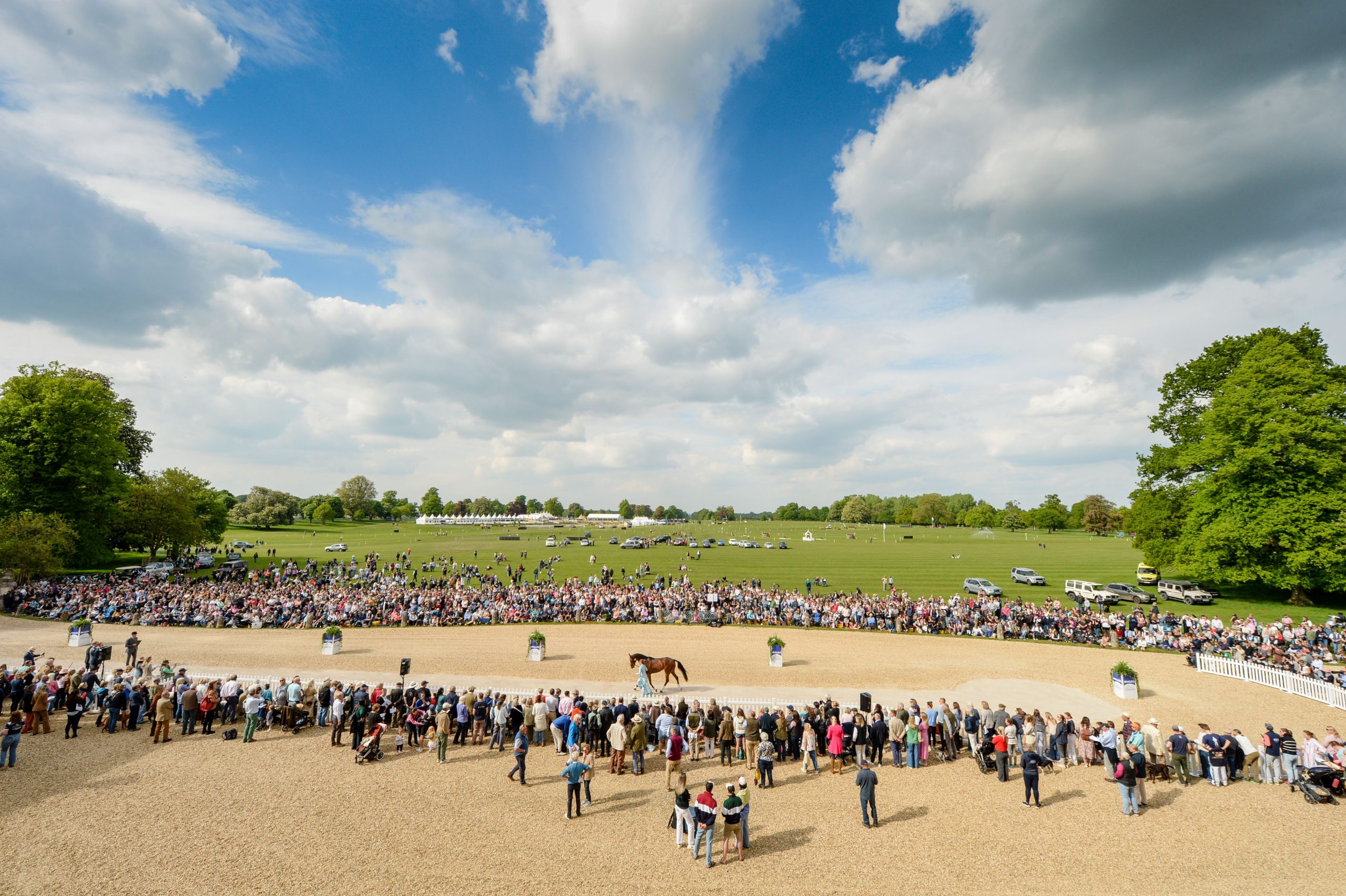
The event recognises the particular risks arising from large numbers of people, uneven terrain, equine activity, vehicles, temporary structures, changing weather and the interaction of pedestrian and operational routes.
- Pedestrian, equine and vehicle routes will be segregated wherever reasonably practicable.
- Locations where horse routes cross pedestrian routes will be controlled by appropriate staff and warning systems.
- Barriers, fencing, signs and other control measures will be inspected and maintained.
- Spectators will be given clear safety information and will be required to follow instructions from stewards, officials, public-address systems and signage.
- Children will need appropriate supervision by their accompanying adults.
- Dogs must remain on leads.
- The site, including grandstands and public areas, will be inspected regularly and corrective action taken where necessary.
Accessibility and vulnerable persons
The event will consider the needs of disabled people and other persons who may be particularly vulnerable to the risks present at the site. Reasonable adjustments and accessible arrangements will be considered in accordance with the Equality Act 2010 and the circumstances of the event.
Risk assessments and emergency arrangements will consider mobility, sensory and other relevant needs, including accessible routes where practicable, viewing areas and facilities.
Contractors and subcontractors
- Contractors must comply with legislation applicable to their work and with Badminton Horse Trials site rules and safety requirements.
- Contractors must report to the designated event/site office and site manager before commencing work where required and receive relevant site information and induction.
- Contractors must provide suitable risk assessments, method statements and other evidence of competence where required.
- Contractors must ensure their employees and subcontractors are appropriately trained, competent, supervised and briefed.
- Contractors must coordinate their work with other activities on site and promptly report hazards, incidents, near misses and defects.
Exhibitors and traders
Exhibitors and traders are responsible for managing the health and safety risks arising from their stands, activities, equipment, staff and contractors, while complying with the event’s site rules and instructions.
Relevant exhibitors may be required to provide risk assessments, method statements, public liability insurance evidence, electrical or other safety documentation and fire-safety information before being permitted to operate.
Competitors and equestrian activities
Competitors must comply with the applicable rules and requirements of the relevant international and national governing bodies, the event’s local regulations and all reasonable safety instructions issued by officials.
Risks associated with horses, horse routes, competition areas, veterinary activity, warm-up areas and interactions with spectators, vehicles and staff will be managed through event-specific risk assessments and operational controls.
First aid, medical provision and emergencies
Appropriate first-aid and medical arrangements will be provided for the event based on risk assessment, expected attendance and the activities taking place. Emergency procedures will identify how incidents are reported, escalated and managed and how external emergency services are contacted.
- A major incident/emergency plan will be maintained and communicated to relevant personnel.
- Emergency access and routes will be maintained.
- Relevant staff and officials will be briefed on emergency procedures and their roles.
- Emergency arrangements will include consideration of severe weather, fire, crowd incidents, equine incidents, serious injury, missing/vulnerable persons and other reasonably foreseeable scenarios.
- Where an incident requires external emergency services, the event will cooperate with the relevant authorities and provide appropriate site information.
Accidents, incidents, near misses and RIDDOR
All accidents, incidents, near misses and safety concerns must be reported promptly through the event’s reporting arrangements. Incidents will be recorded, investigated to a proportionate level and used to identify corrective and preventative actions.
Where an incident is reportable under RIDDOR 2013, the responsible person will ensure that the required report is made to the appropriate enforcing authority within the applicable statutory timescale.
Communication, consultation, information and training
- Relevant health and safety information will be communicated to employees, contractors, officials, volunteers, exhibitors and other affected persons.
- Briefings and inductions will be proportionate to the risks and responsibilities of each role.
- Safety-critical roles will be undertaken only by persons with appropriate competence, training and supervision.
- Workers and relevant representatives will be given appropriate opportunities to raise health and safety concerns.
- Safety information will be made available in forms that are reasonably accessible to those who need it.
Monitoring, inspection and review
Health and safety performance will be monitored throughout the event through inspections, observations, incident and near-miss reporting, contractor monitoring and management review.
This policy and the supporting arrangements will be reviewed periodically and whenever there is a significant change in the event, site, activities, organisation, legislation or relevant guidance, or following a significant incident.
Co-operation with authorities and other organisations
Badminton Horse Trials will maintain appropriate liaison with relevant enforcing authorities, emergency services, local authorities, landowners and other organisations whose activities or responsibilities may affect health and safety.
Liability and admission
Admission, tickets, badges, car park labels and hospitality packages are subject to the organisers’ current terms and conditions, including provisions concerning admission and removal from the site.
Any exclusion or limitation of liability must be read subject to applicable law and must not purport to exclude or restrict liability where such exclusion or restriction is unlawful. The organisers’ current legal terms and conditions should be used for the 2027 event rather than relying solely on this policy statement.
Approval and review
| Document | Health and Safety Policy Statement 2027 |
| Event | Badminton Horse Trials – Wednesday 5th to Sunday 9th May 2027 |
| Approved by | Jane Tuckwell, Event Director |
| Date | October 2026 |
| Next formal review | Before the 2028 event, and earlier if circumstances, legislation or arrangements change |
Review basis and principal sources
- Health and Safety at Work etc. Act 1974 – section 2(1) and section 2(3) policy requirement.
- HSE, HSG65 – Managing for health and safety (Plan, Do, Check, Act framework and competence).
- Management of Health and Safety at Work Regulations 1999 – risk assessment and competent-person arrangements.
- PUWER 1998 and HSE L22 – safe use of work equipment.
- LOLER 1998 and HSE L113 – safe use of lifting equipment.
- Work at Height Regulations 2005 and HSE guidance.
- CDM Regulations 2015 and HSE L153 – where construction duties apply.
- COSHH 2002 and relevant HSE guidance.
- RIDDOR 2013 and HSE reporting guidance.
- Regulatory Reform (Fire Safety) Order 2005 and Home Office guidance for open-air events and venues.
- Equality Act 2010 – reasonable-adjustment duties in relevant circumstances.
- Badminton Horse Trials official future dates and 2027 event information.