

2026 Cross Country Course
Eric Winter’s course design
Take a fascinating interactive tour with course designer Eric Winter, alongside Katy Lawrence and Emily Proud, winners of the 2025 LeMieux Grassroots 100cm and 90cm Championships.
Best viewed in full screen mode.
Click on any fence on the map for photos, film and audio or browse the whole course. Best viewed in full screen.For additional features such as minute markers, to pinpoint your location on course, record and publish your own courses download a free trial of CrossCountry App


Available on Mobile
You can view this map on mobile in the Cross Country App and the official Badminton app
THE COURSE DESIGNER – Eric Winter (GBR)
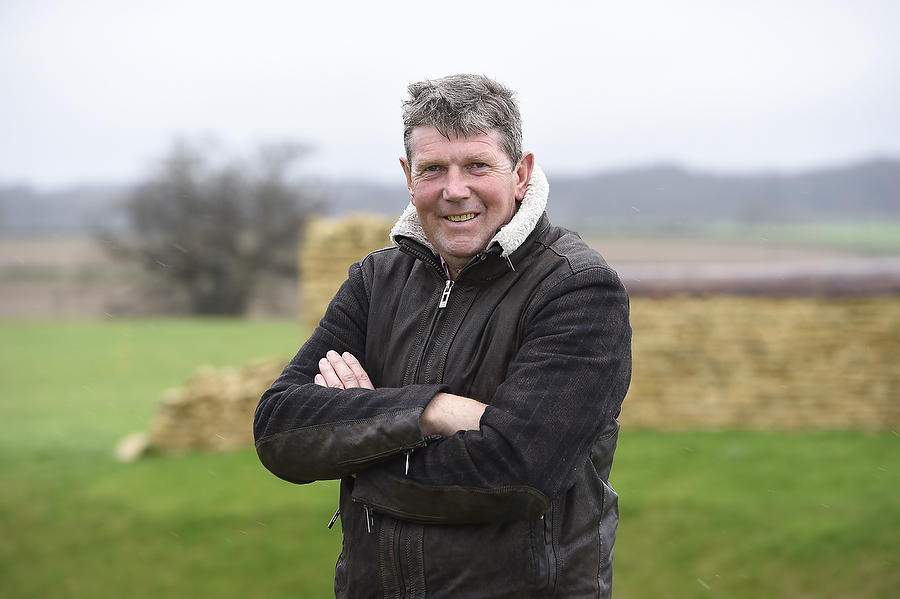
Eric Winter takes us round the course he designed which this year runs around the park in an anti-clockwise direction.
Fence by Fence Illustrations
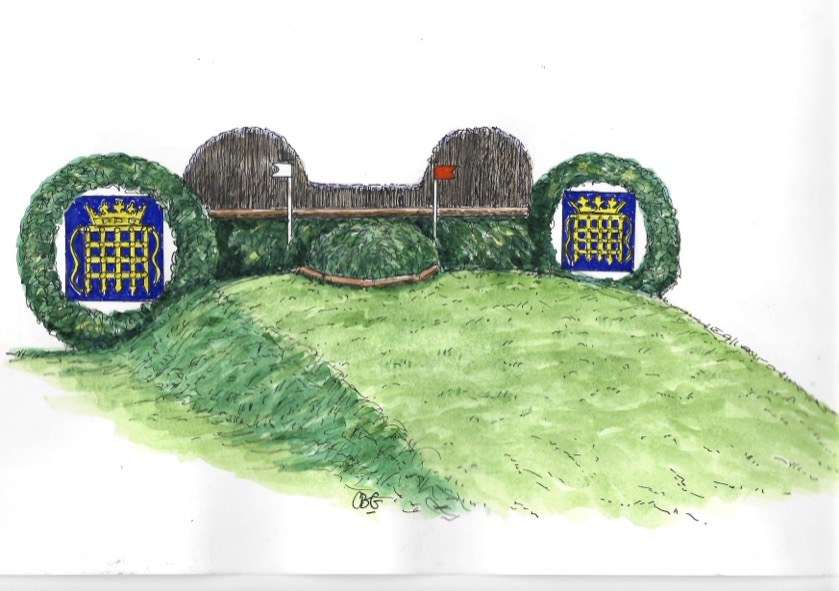
1. Pedigree Starter
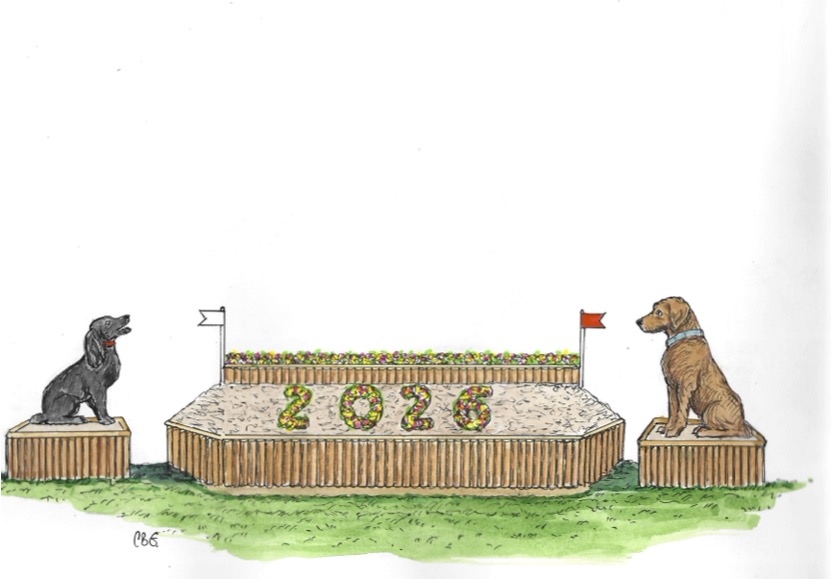
It starts with the Pedigree Starter. The atmosphere in this main arena is always something special on cross-country morning. When the competitors are standing waiting to start, being called up by the starter and then hearing the final countdown, their whole world is riding on the next twelve minutes. There is no one whose nerves are not a little rattled by this. The first few fences are nice, inviting ones to let the nerves of both horses and riders settle.
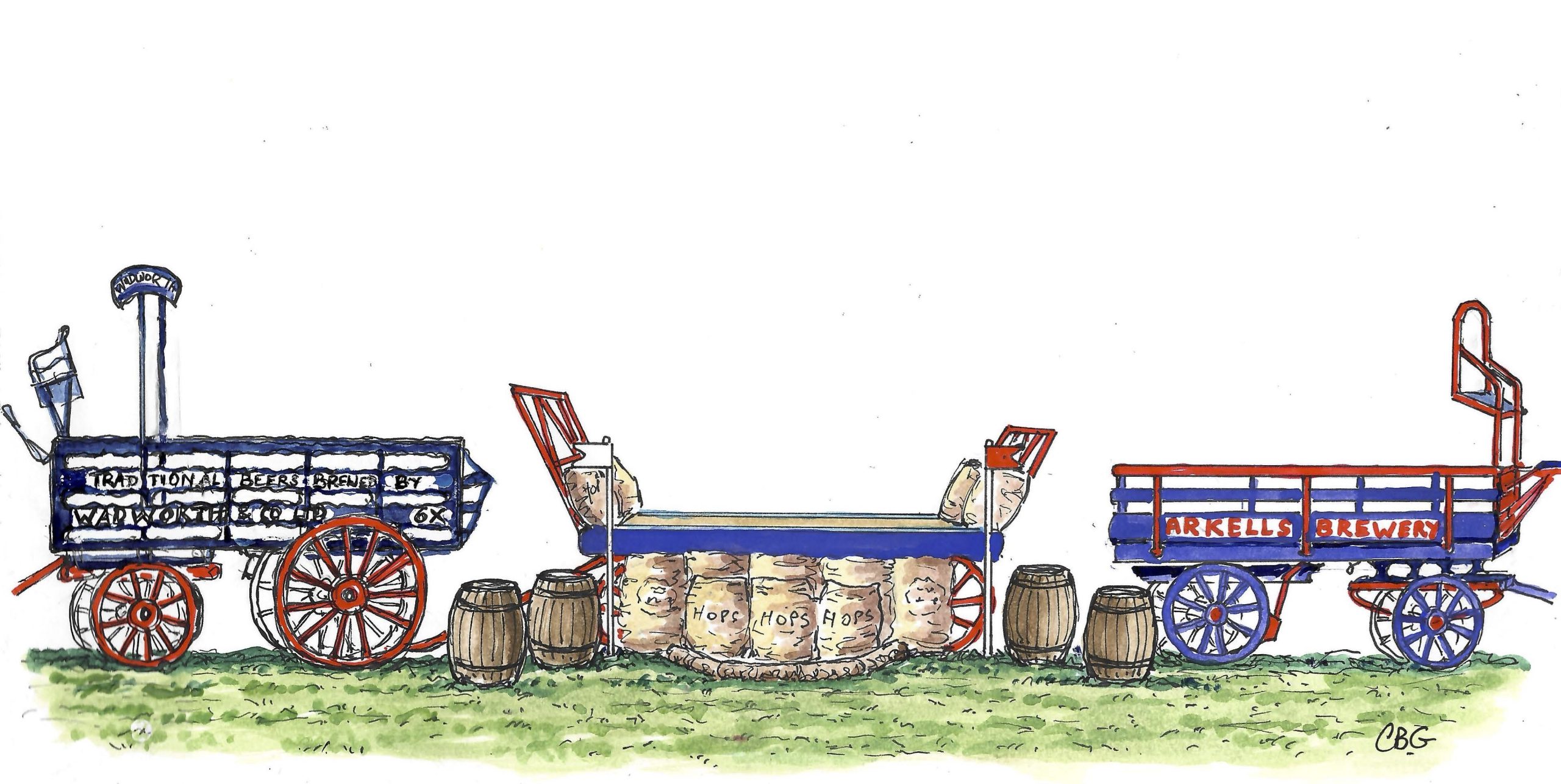
2. The Wiltshire Brewer Drays & 3. Manor House Mound
Fence 2, the Wiltshire Brewers Drays, and Fence 3, the Manor House Mound, should pose no problems for combinations at this level.
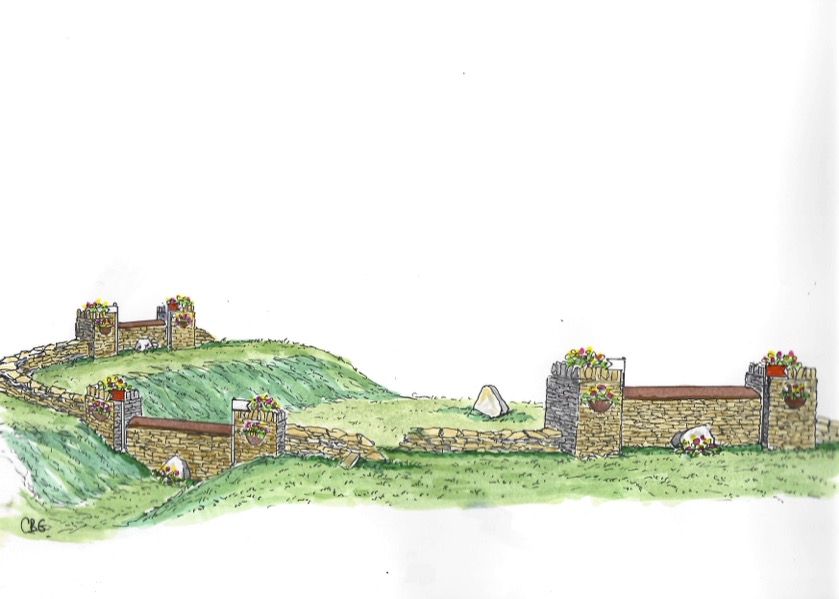
4AB. HorseQuest Quarry
The first test comes at the HorseQuest Quarry. The first combination on the 2026 course goes back to the original walls on top of the steep hollow. This should be a bit of a wake-up call. The ground drops away quickly after the first wall, and then there is a 90-degree turn to the left in the bottom of the hollow, before climbing back up the steep slope to the second wall perched at the top of the bank.
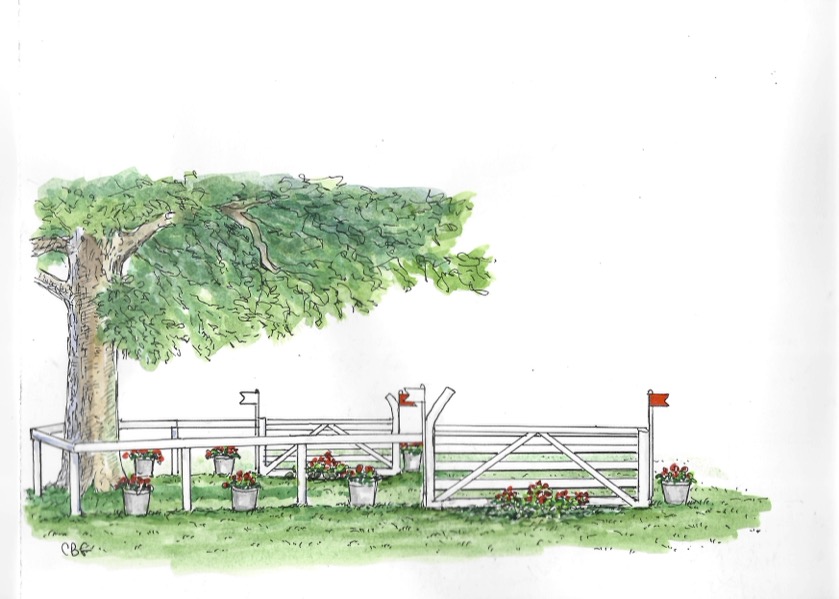
5AB. The Ebony Horse Club Gates
Fence 5, the Ebony Horse Club Gates, is two upright gates on one stride. They are a bit of a speed bump. The horses have to be obedient and careful here because, with the deformable mechanisms, the gates will fall if hit too hard and reward the careless combination with 11 penalties.
6AB. EQUIDRY Huntsman’s Close
From the gates they go on to Fence 6, the EQUIDRY Huntsman’s Close. This year we only have two elements to this combination: two big upturned buckets with shoulders cut into the brush at the top. Placed in the trees, these are two of the biggest fences on the course: 1.45m high (4ft 9in) with a 2m (6ft 6in) top spread, and both on acute angles. There is little room for error here.
7AB. ClipMyHorse Cord Piles
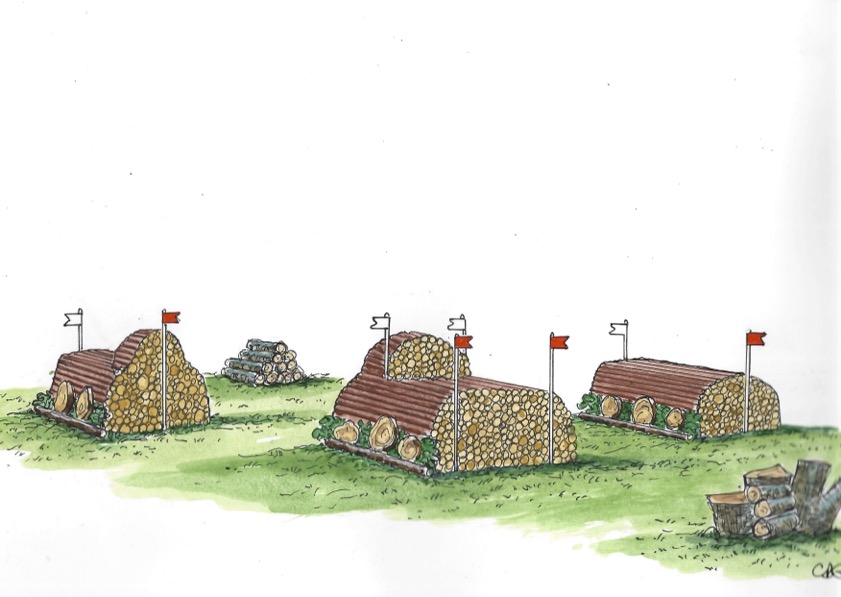
Fence 7 is the ClipMyHorse Cord Piles. We have used these fences many times before, but this is the first time we have had them here, by the kennel gate. There is a choice of the big log pile on the right or two smaller ones under the tree on the left. I think most will jump the single effort, as it will sap less energy than the effort of jumping the double.
8. Beaufort Owl Hole
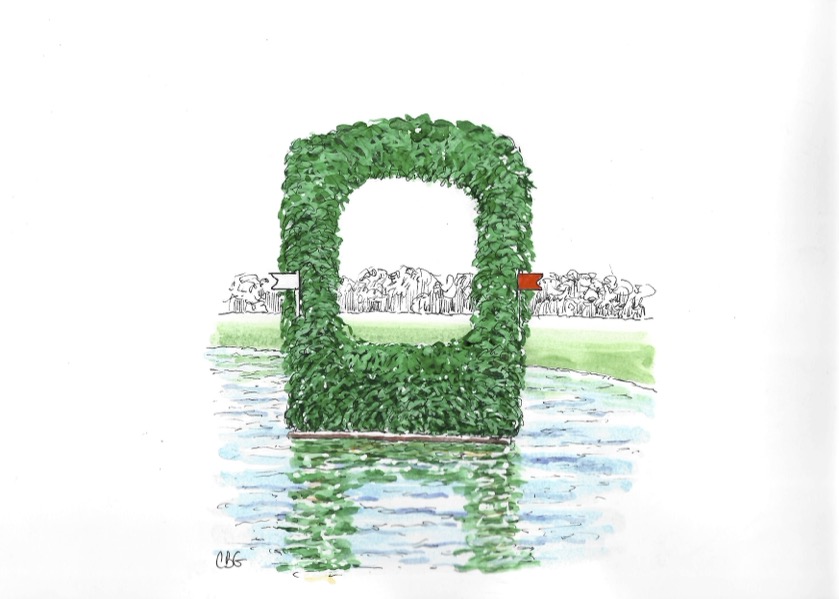
Fence 8, the Beaufort Owl Hole, is a new fence for 2026, constructed out of a limb from a fallen tree on the estate. It is placed in the small expanse of water at the house end of the lake. This is a chance for the horses to get their feet wet before the main lake area. It should jump well, but it is a fence that you have to slow down into, with a short canter, to jump properly. The atmosphere in this area of the course is not to be underestimated; it is unlike anything the horses will meet at any other event in the world.
9AB / 10AB. MARS Lake
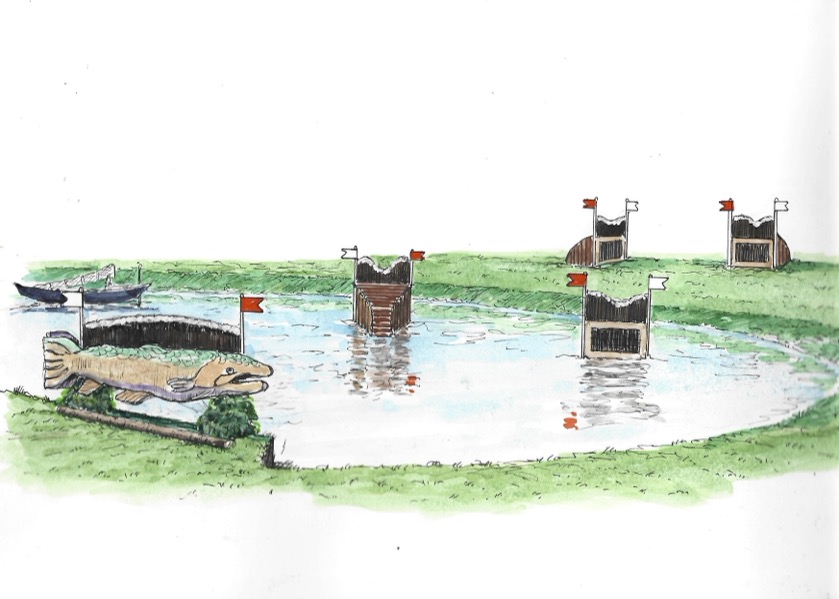
Fences 9 and 10 are the main MARS Lake, and it is very different this year. It starts with a big two-metre drop, about 6ft 6in, into the water over the brush fish, followed by four strides to the narrow brush in the water. This, in itself, is a big question, demanding courage and accuracy. This is followed by a turn in front of the crowds and back to a narrow brush at the top of the bank, then four or five strides to another narrow brush in the water.
Time taken on the turn to get straight for the first of the narrow brushes at the top of the bank will be crucial. This is somewhere the riders will want to forget the clock and make sure they are leaving the MARS Lake without penalties. There is a slow route here, but taking the slow route at the B element of Fence 9 means they are then committed to taking the slow route at the A element of Fence 10, which will take a significant amount of extra time.
I think the Lake area will be very influential on cross-country day, not only because of the possibility of running past an element, but also because combinations will be travelling for a long time at well under the required speed of 570 metres per minute. Riders will have to decide how and where they are going to make that time back over the rest of the course.
11. World Horse Welfare Waterfall
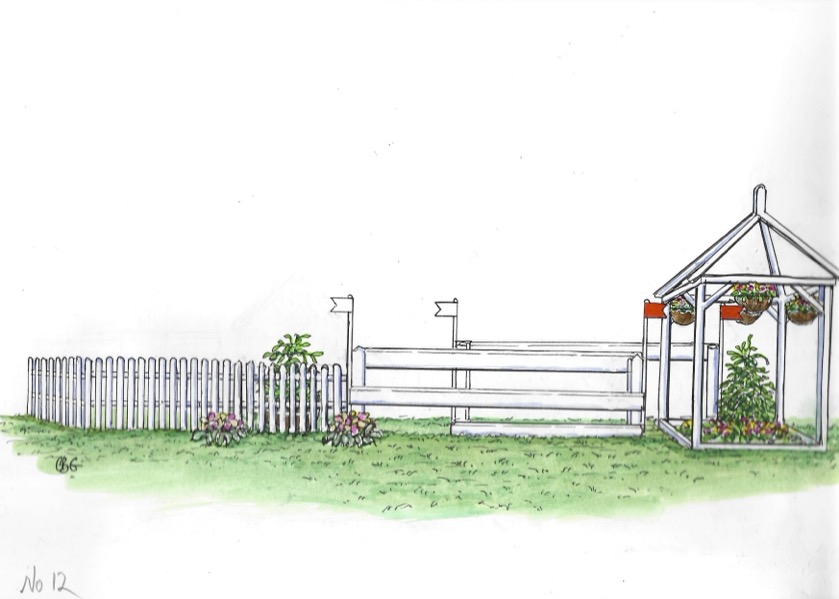
12. Project Pony Puzzle
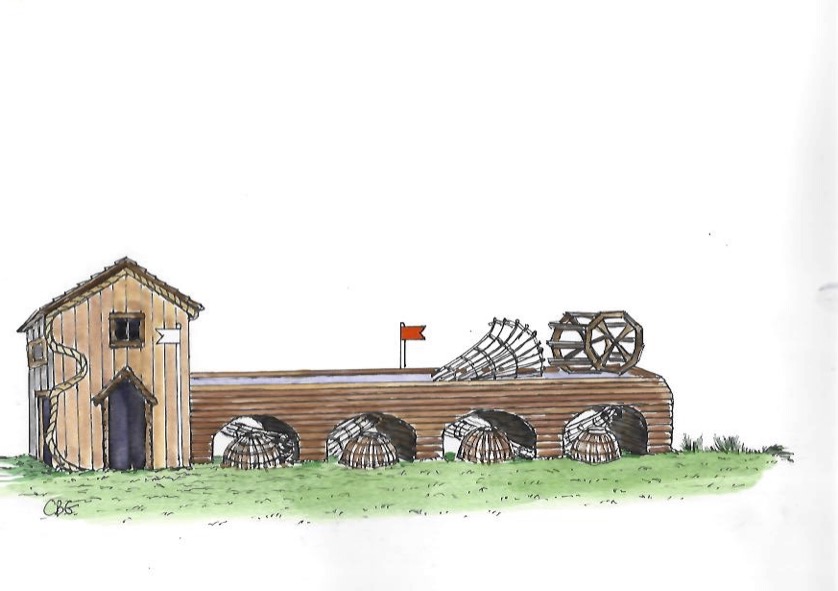
Fence 11, the World Horse Welfare Waterfall, and Fence 12, the Project Pony Puzzle, should be straightforward fences. Although both are big, the horses will be in their stride by now and should eat these up.
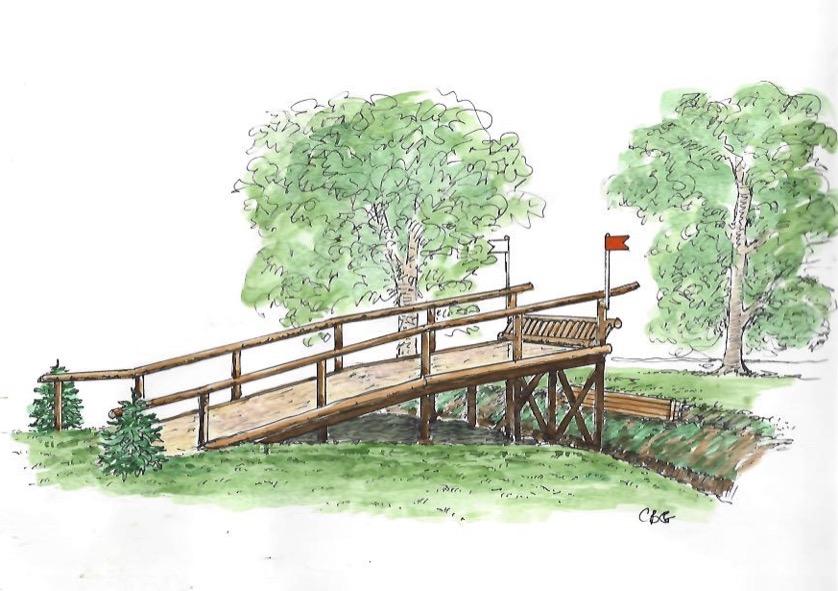
13. British Eventing Broken Bridge
Fence 13, the British Eventing Broken Bridge, is a spectacular fence to ride and watch, jumping from the top of the ramp over a three-metre-wide ditch with a 1.8m (6ft) drop.
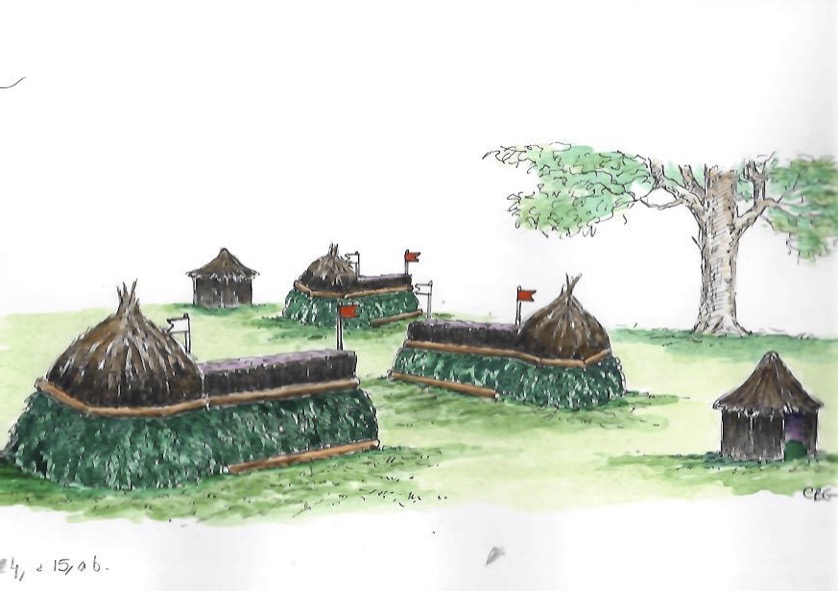
14AB/15. KBIS Slalom
Fence 14AB and 15, the KBIS Slalom, really will take some thought. It is basically three big brushes on acute angles to each other. You can jump the first two brushes on a slightly less acute angle and then circle around the tree to approach the third element with no penalties, but this will cost a lot of time. The fast route is to thread the needle through all three. They are all 1.45m high (4ft 9in), and to get through all three the horses and riders will have to accept the acute angle on each one. I am sure some will make this look easy, but I can see a few misjudging either pace or line and regretting it.
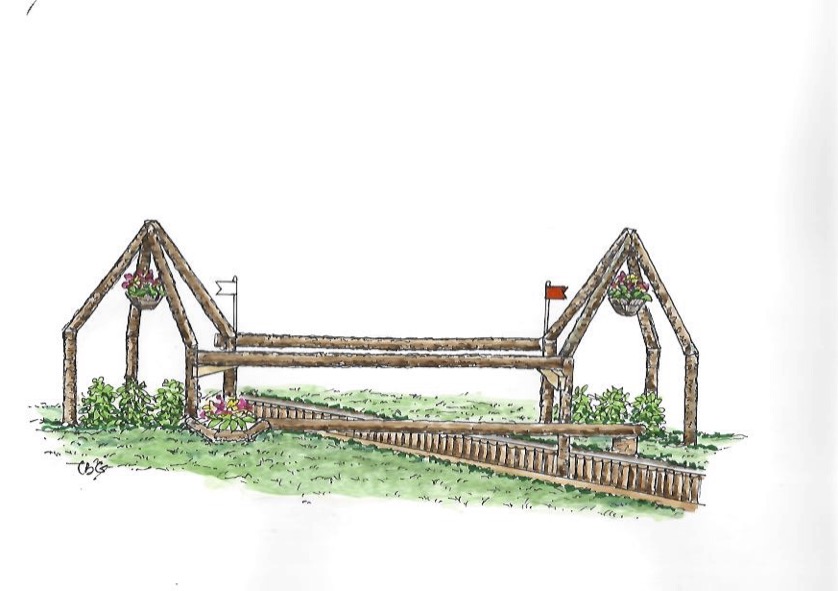
16. the Vicarage Oxer
Fence 16, the Vicarage Oxer, is a big set of open parallel rails over the Vicarage Ditch. This should be a simple flyer fence, but it is the first of five times they will cross this ditch, so a good jump should build confidence for the following few minutes.
17. Joules T Bar Log
18AB. LeMieux Village
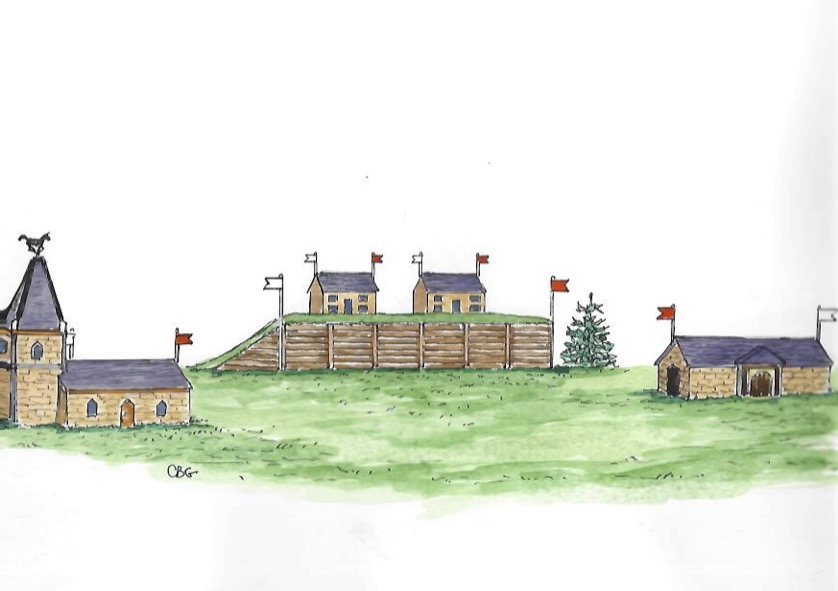
Although the Joules T Bar Log, with its big open ditch in front of the narrow T-log, is a significant question, it is almost a set-up fence for Fence 18, the LeMieux Village. The straight fast route is to jump up the 1.20m (4ft) bank and bounce over either the left or right house. A bounce is when there is not enough distance for a full canter stride, so the horse has to take off instantly to jump the second element. There is little difference between the left or right route; it is just personal choice.
19. Antech Trakehner
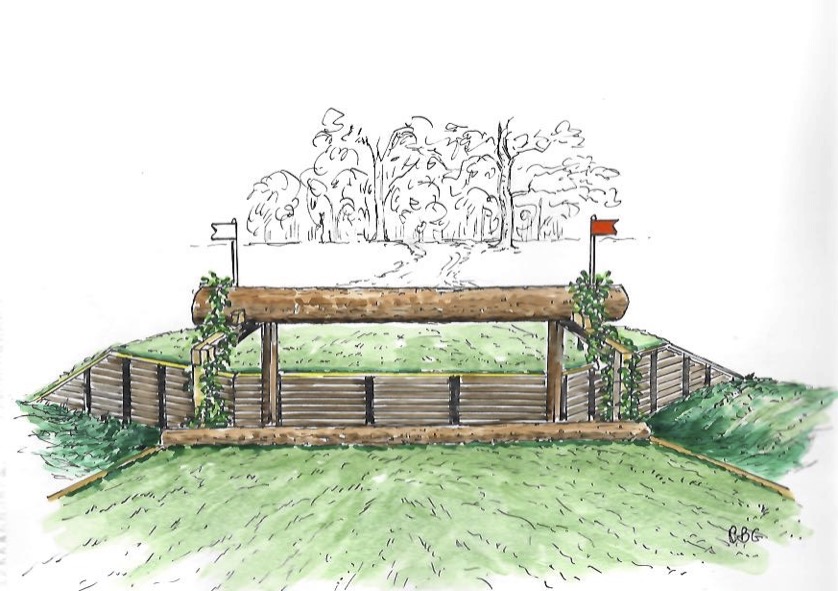
The Antech Trakehner, Fence 19, should be easy. It is the main holding fence in this area of the course. Holding fences are jumps that are pre-selected by the controller as places to stop horses if there is a problem later on the course, so that they have an easier fence to get going again after being held.
20ABCD. MARS Sustainability Bay
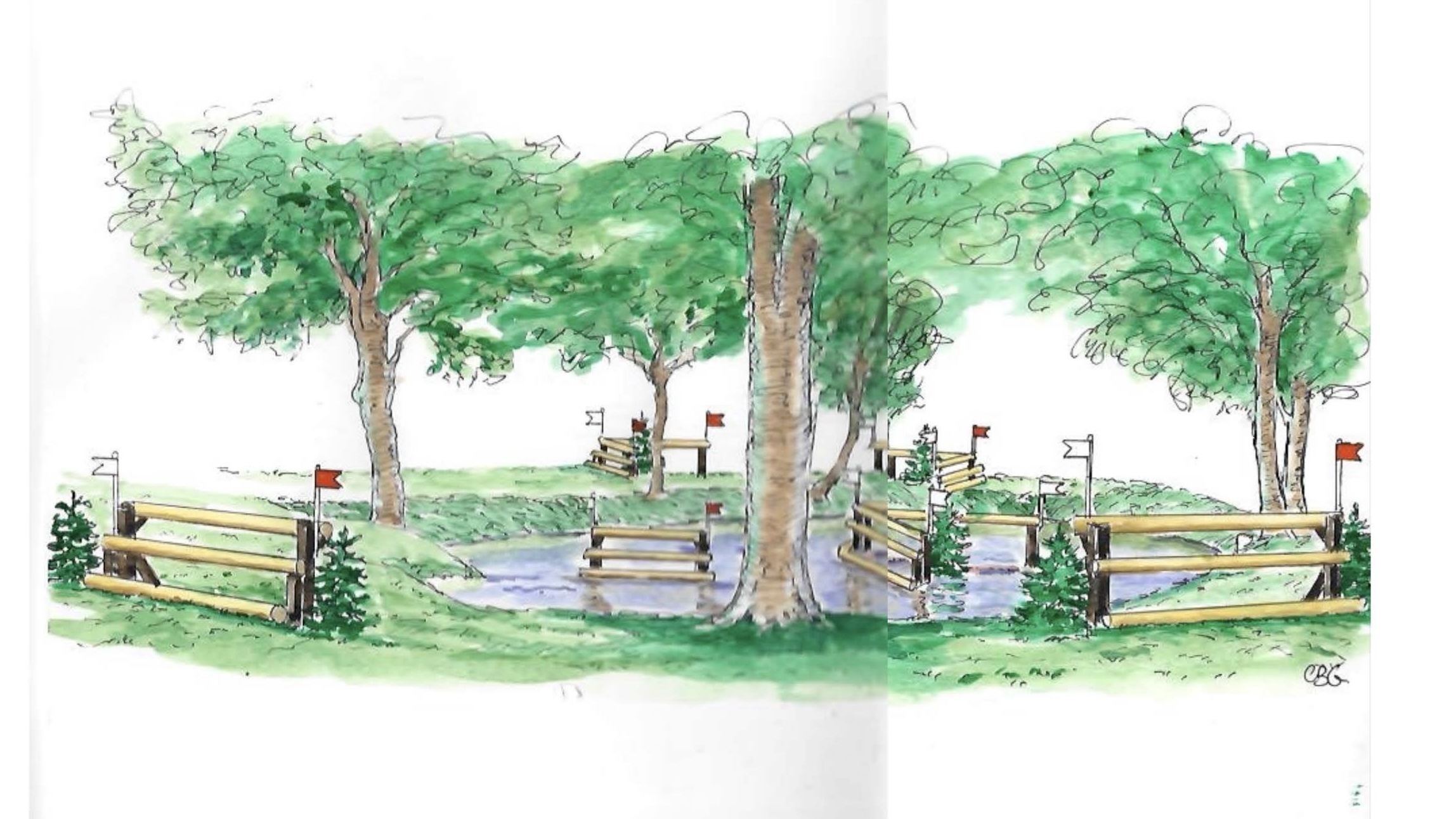
Fence 20, the MARS Sustainability Bay, is, I think, going to be another influential combination. There are two routes here, with not much difference in time. Route one is an upright rail to a big corner in the water, followed by another big corner at the top of the bank. The second route goes across the water: an upright set of rails at the top of the bank to a set of rails in the water, then up a steeper bank to a big corner on the side bank. The first route is about range and scope; the second route is about being quick and neat. Knowing your horse’s preferences and knowing its strengths will be essential here.
From here they get a bit of a mental breather, with a long gallop through the valley, over the bridge and up to the next intense little stretch.
21AB. INEOS Sunken Road
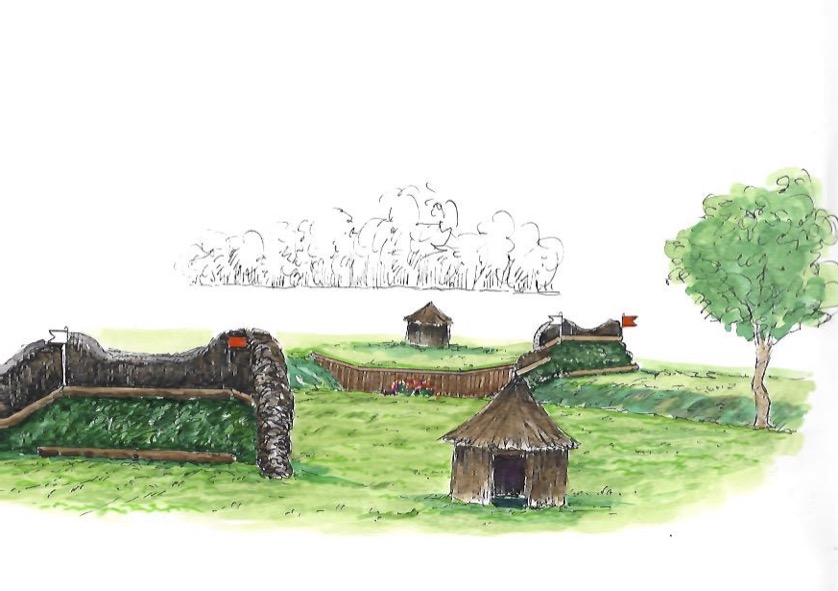
This starts with the INEOS Sunken Road, Fence 21. These are two maximum-height brush fences either side of this little valley. There is a lot of footwork here for the horses but no hidden tricks, so it should be a nice fence to ride.
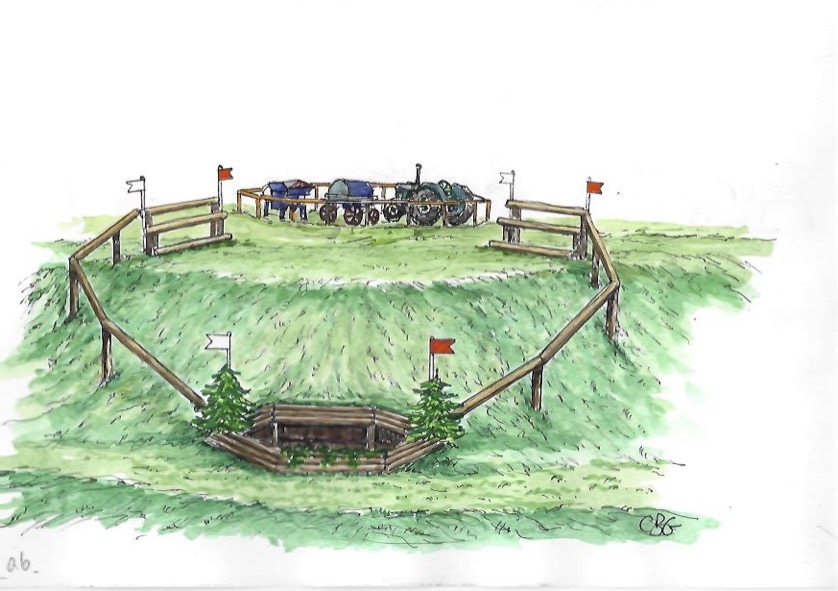
22AB. Mike Weaver’s Farm Yard
Only 80 or 90 metres later is Fence 22, Mike Weaver’s Farm Yard, which is completely the opposite of the two hedges previously. Those were stand-back-and-be-bold fences; this is a question for a neat, short canter. It consists of a small round ditch at the bottom of a steep little hollow, then up the bank on one stride to an upright rail. There is a left- and right-handed route here without much difference in time.
As there is not enough room to land and turn to the rail, the riders will have only one stride, so they will have to line up the rail on approach to the ditch. This means jumping the little round ditch on an angle. Horses rarely jump this ditch as they would a big straight one; they quite often skip over it, making it difficult to predict the stride pattern on the stride up the bank. This fence is about quick-footed horses and the correct approach.
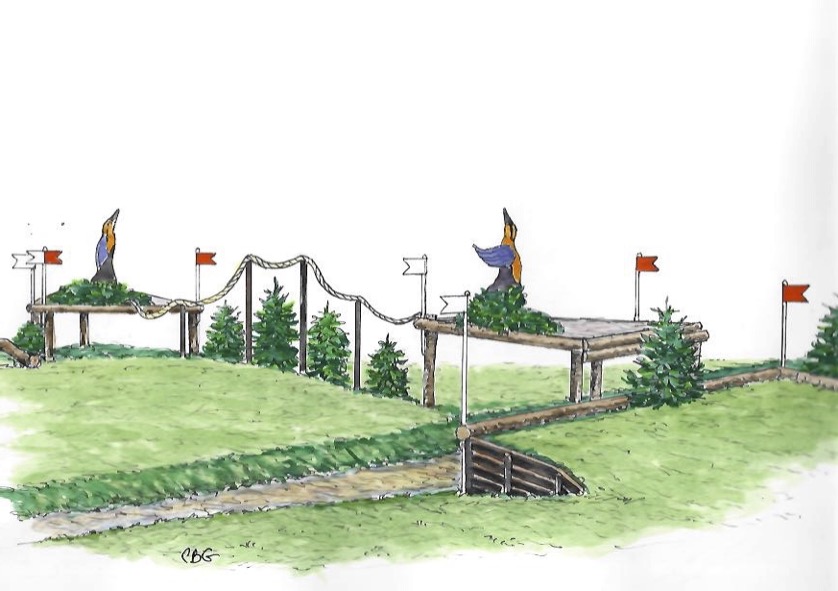
23/24. Luckington Lane Corners
Fences 23 and 24 are actually just one big corner over the Vicarage Ditch. The fact it carries two numbers allows the riders to circle on the slow route. This fence was first used last year and jumped very well. The line is critical here, but with the correct approach the horses jump it well.
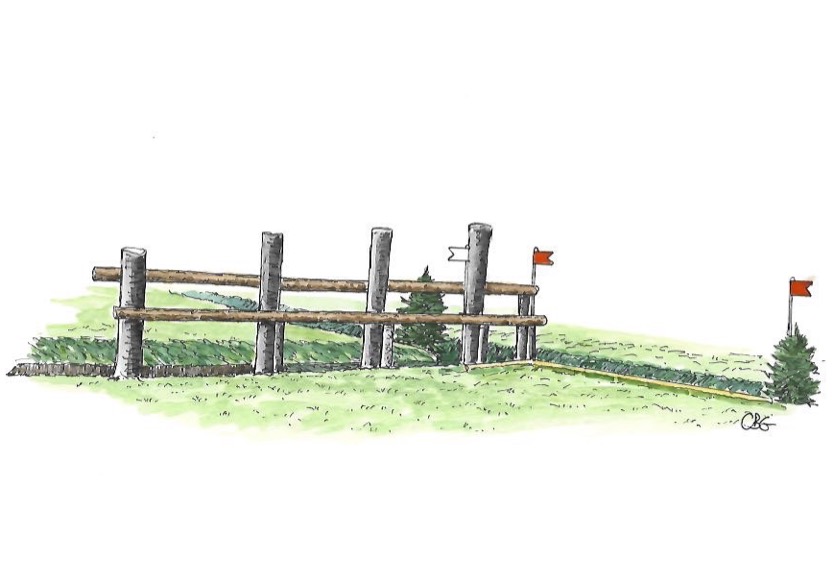
25AB. Holland Cooper Vicarage Vee
Then, in quick succession, it is on to another similar question: the Holland Cooper Vicarage Vee. This is a real mainstay of Badminton and has been in many courses here over the years. It is still a difficult fence to jump: a big ditch under an angled set of rails. As the riders sweep around the turn, they will be looking for their line to one of the big oak trees in the distance. If they have had a good jump over the previous corner fence, it should set them up well for this; if that jump has been a bit sketchy, then they might seriously be considering the long route.
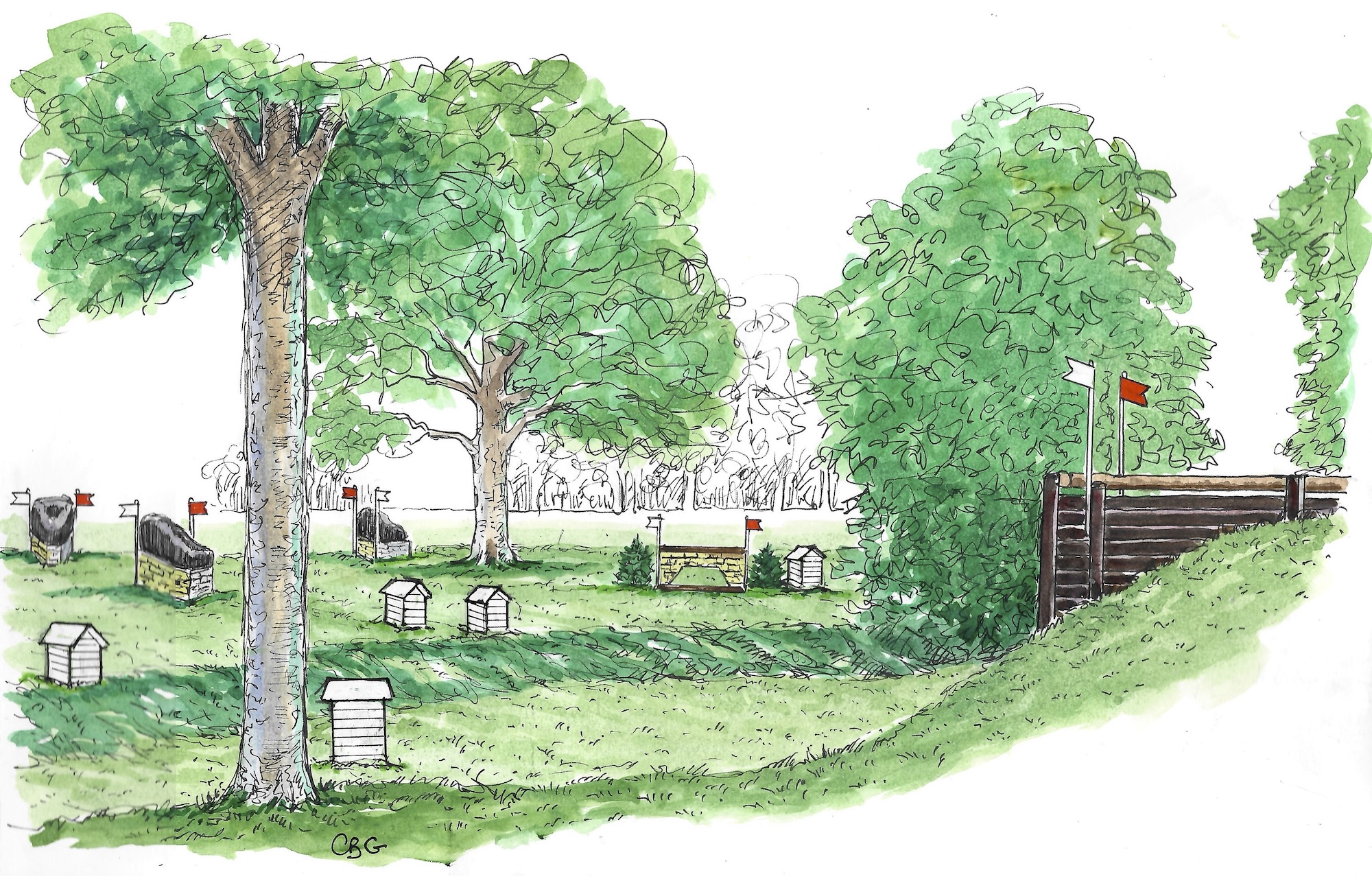
26ABC. Mayston Equestrian Hollow
Then it is up the hill to the Mayston Equestrian Hollow, Fence 26. This obviously comes at the end of a very intense part of the course, so making sure the horses are still confident and listening will be important. Up the bank and off the two-metre step is the first part. This will be the third time we have jumped off this step, and it always causes a few interesting things to happen: the odd stop and look, the odd enormous leap off it. You can never quite tell with a question like this, so the riders will need to be prepared for anything.
Once down off the step, they travel across the hollow and up the bank to two big narrow brushes on three strides. These are fairly straight on to the step, so they should be easy for the horses to read. Getting the right canter across the bottom of the hollow will be key to a good jump here.
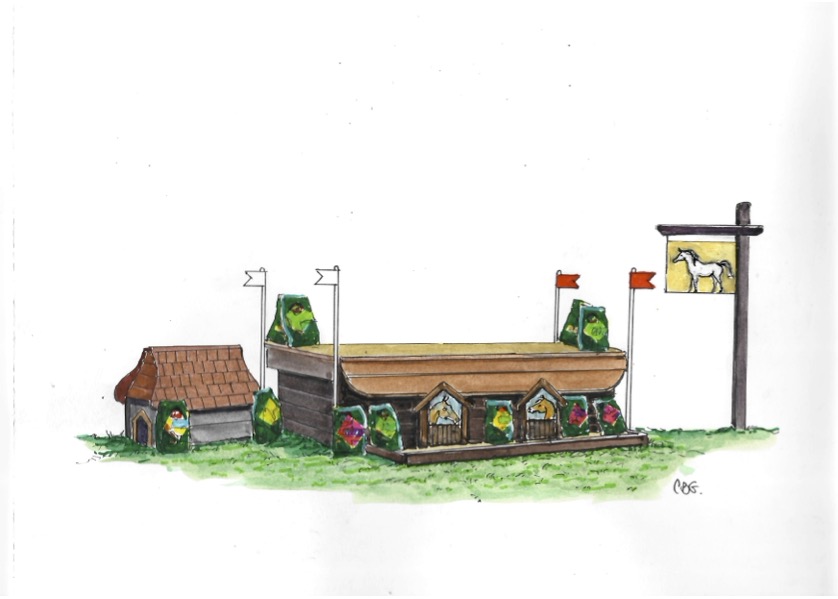
27. Spillers Stable
Now the riders will be starting to think about home. The Spillers Stable is a big fence but should be a straightforward confidence booster.
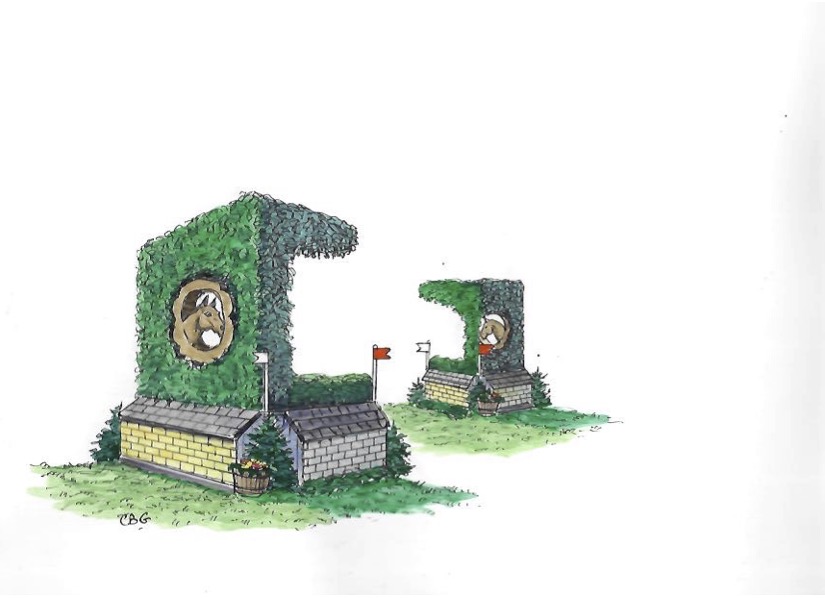
28AB. Rathbones Curve
Fence 28, Rathbones Curve, is two big corners with roofs. We used these early in the course for the first time last year; this year they come near the end. They are set on a six-stride turning arc, but I am sure we will see other stride patterns here. They are very big fences at this stage of the course and will demand a great deal of respect.
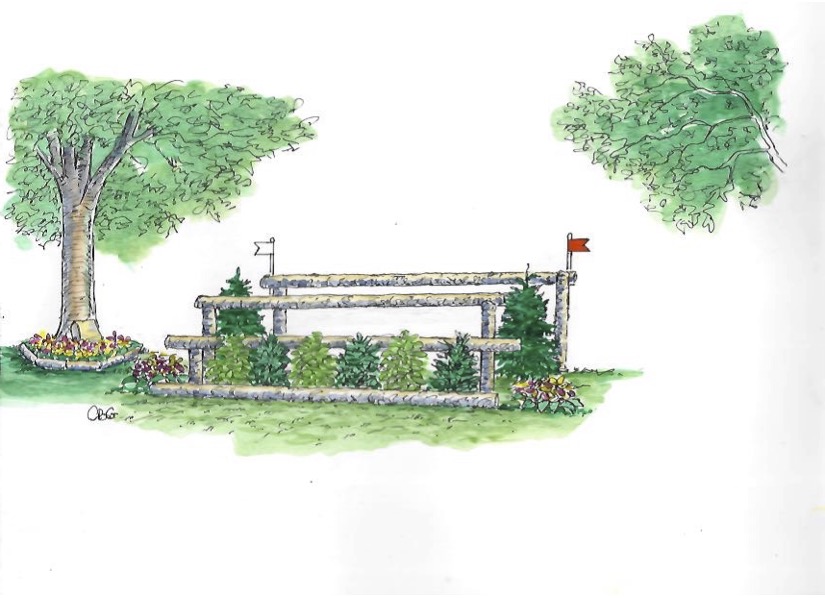
29. Countryside Parallel
From here they run downhill to the Countryside Parallel, which is deformable and therefore has to be respected.
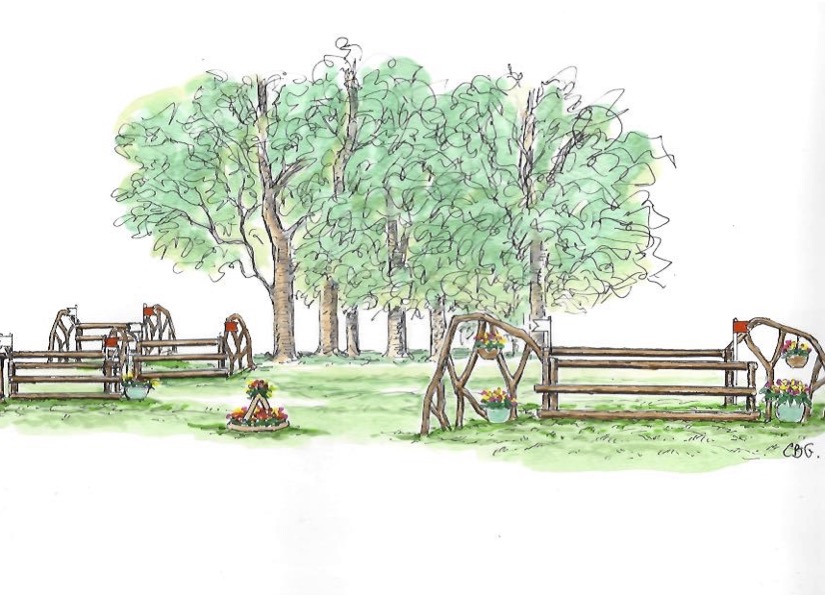
30ABC. Savills Keepers’ Rails
Fence 30, Savills Keepers’ Rails, is two big parallels on a curve. There is a slow route here where you jump the first parallel and then go to two upright rails by the side. This does not take long, but every second counts. By now many of the riders will be in the land of time penalties.
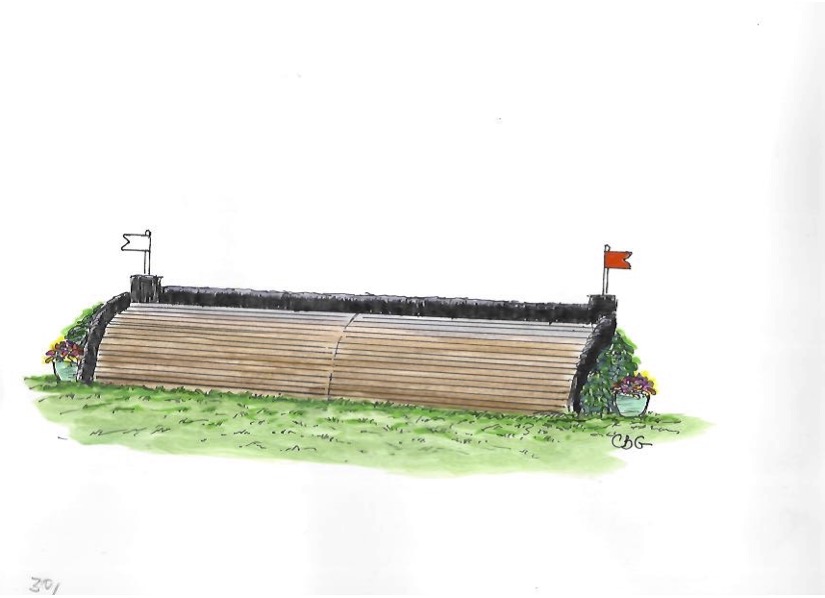
31. Worcester Roll Top
The Worcester Roll Top is another big fence, but this close to the end of the course it will be about keeping focus and not making a silly mistake.
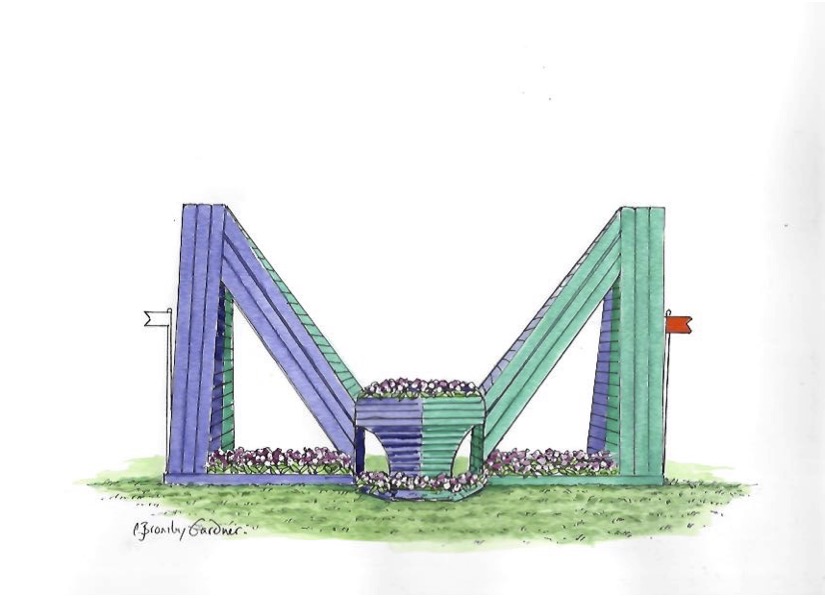
32. MARS M
Fence 32, the MARS M, will be a welcome sight: the last fence on the course.
I think the 2026 course is big and technically demanding. Some of the areas where we have traditionally had three elements to a combination now have only two, but we have thirteen combinations of fences, which is more than we have had before. Saturday should be an interesting day. I wish all the riders and horses the best of luck.
I think the 2026 course is big and technically demanding. Some of the areas where we have traditionally had three elements to a combination now have only two, but we have thirteen combinations of fences, which is more than we have had before. Saturday should be an interesting day. I wish all the riders and horses the best of luck.